 PrimePatio
Bringing a grey deck back without wrecking the boards
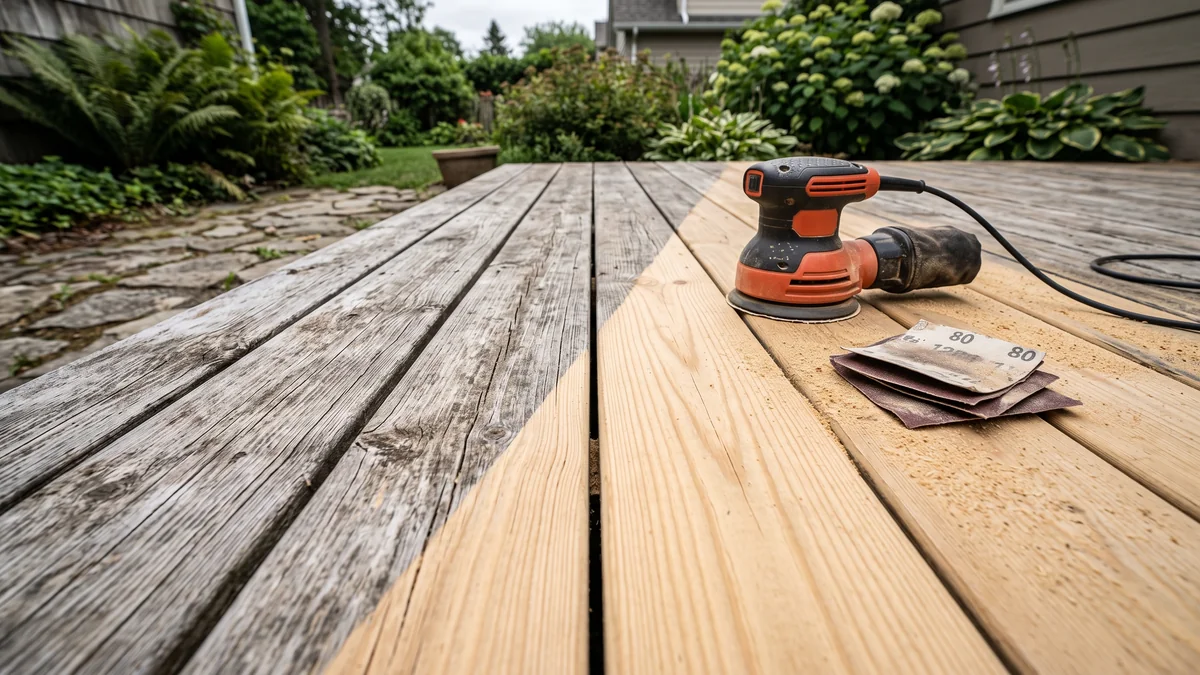
A deck the colour of an old fence post looks finished. Usually it is not. The grey on those boards is a fraction of a millimetre deep, and the timber underneath is sound. Ripping the lot out is an expensive answer to a cosmetic fault.
Grey is sunburn, not rot
Timber is cellulose and hemicellulose held together by lignin. Lignin is the glue, and it is the part that absorbs ultraviolet light. Sunlight breaks it down, rain washes the loosened pieces away, and what stands on the surface afterwards is a fuzz of loose cellulose fibre. That fuzz scatters light instead of reflecting it evenly, which is why weathered softwood reads as silver.
That is photodegradation, and on softwood it stops at roughly a tenth of a millimetre. Decay is another matter. Fungi that eat timber need moisture held above about twenty per cent for weeks, and the dry, sunlit top face of a deck is one of the worst places on the structure for them. Real damage is nearly always somewhere you cannot see from a chair.
The screwdriver test
Press the tip of a flat blade screwdriver hard into the board. Sound timber resists and takes a small dent. Rotten timber gives, then keeps giving, and the tip sinks five millimetres or more. If the wood breaks away in short cubes, or feels spongy and stains dark, that board is past saving.
Test where decks fail first:
- board ends, especially where two boards butt over the same joist
- under planters, pots and doormats that have sat for a season
- the first two boards against the house, where splash comes off the wall
- around every fixing, and along the underside, which never sees sun
Test on a dry day, before you wash anything. Wet timber takes a screwdriver far more easily, and on a soaked deck you will condemn sound boards.
Start underneath, not on top
Get below the deck with a torch, or lift two boards if there is no way in. Three things matter. The top edge of each joist, where water sits in the gap under the board and works out of sight. The fixings, since rusted heads and weeping black holes mean the fastener has been eating itself and the timber round it. And movement: stand mid span while someone watches the joist, because anything that flexes wants a sister joist bolted alongside it. Sanding is not a job you can sensibly do twice, so settle the frame first.
Wash first, and keep the pressure down
Sanding a dirty deck wastes abrasive. Grit and algae clog a belt in minutes, and a clogged belt burnishes instead of cutting. Sweep, rake the gaps out with a jointing knife, then wash with a stiff brush and a deck cleaner.
If you are reaching for a pressure washer, this is where the classic mistake happens. A narrow nozzle held close at full pressure carves the soft spring growth out from between the harder summer bands and leaves the board rippled and furred, which is deeper damage than the weathering you set out to remove. Fit a wide fan tip, hold the lance 250 to 300 millimetres off the timber, and keep it moving along the grain. Then leave it two or three dry days, longer in shade.
Working through the grits
Each pass takes out the scratches left by the one before. Skip a step and the coarse pattern shows through once oil darkens it.
| Pass | Grit | What it is doing |
|---|---|---|
| First | 40 | Only for boards that are badly furred, ridged or carrying flaking stain. Cuts fast, and leaves a deep scratch to remove. |
| Second | 60 | Clears that scratch and the last of the grey. On a deck in fair order, start here. |
| Third | 80 | The finish for softwood. Smooth underfoot, open enough for oil to soak in. |
| Hardwood | 100 | Dense boards such as balau take one step finer. Stop there. |
Do not go past 100 grit. Fine abrasive polishes the pores closed, and oil then sits on top instead of drawing in. Work one board at a time, along its length, keep the machine moving, and change paper as soon as it stops cutting. A belt sander with decent dust extraction handles the open run. Edges want a detail sander or a cork block.
Proud screws and nail pops
Every fixing standing above the surface will tear a belt. Before the first pass, go over the deck on your knees and drive the screws two millimetres below the face. If one spins in a chewed hole, fit a longer and thicker screw, or move it along the joist and plug the old hole.
Nails are worse. Boards swell in winter and shrink in summer, and each cycle walks a nail further up. That is a nail pop, and punching it down buys you a season. If the deck was nailed, pull them while the boards are bare and refix with stainless or coated decking screws.
When a board has genuinely gone
Replace rather than restore when the screwdriver sinks in more than five millimetres, when a split runs a third of the board length or passes through a fixing, or when the board has cupped far enough to hold standing water. A bad board is not only ugly. It holds water against its neighbours and against the joist below. New timber will not match for a season or two, so put replacements where the table goes.
Oil or stain
Two products doing different jobs, and the choice matters more than the brand on the tin.
Oil soaks in and stays flexible. It slows water moving in and out of the timber, which is what keeps the surface from checking, and it wears thin rather than peeling, so a recoat is a wash and another coat. Plain oil does little against sunlight, so choose one with pigment in it.
A film forming stain sits mostly on the surface and carries more pigment, so it holds colour longer. On something walked on and rained on, that film eventually cracks and lifts at the edges, and the only way back is to sand the whole deck again. Underfoot, a pigmented oil is the easier life. Keep the film finishes for balustrades and posts. Thin coats, along the grain, and flood the end grain, which drinks ten times what a face does.
Plan around the forecast, not the weekend. Sand and oil on the same day if you can, and keep the oil out of full midday sun. A hot board skins over before it has drawn anything in.
How long it lasts
On a south facing softwood deck in southern Europe, a pigmented oil holds its colour for a season and its water repellency for about two. In shade, or further north, two to three years. The deck tells you when it is due: water stops beading and starts darkening the board. Catch it there and the upkeep is a Saturday with a brush and no machine at all. Leave it four or five years and the grey comes back, and so does the sander.
More write-ups on decks, paving and outdoor power.
Back to all projects